
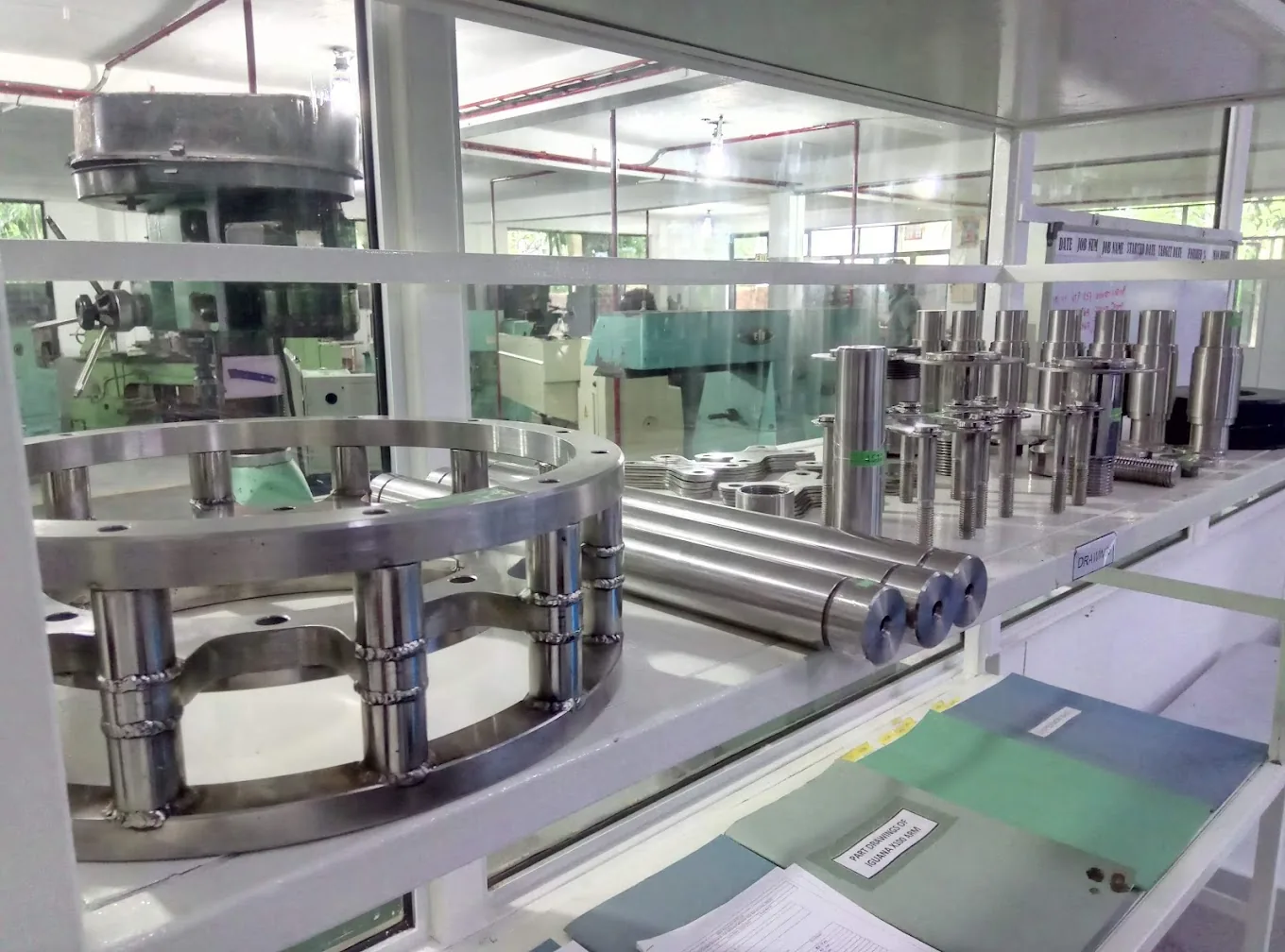
On the coast, every piece of metal is in a fight it can't win unless it's specified correctly. Salt, spray and relentless UV will find the weakest point in any fitting — so the difference between hardware that lasts a decade and hardware that streaks with rust in a season comes down to material, technique and finishing.
Not all stainless is "stainless"
The term covers dozens of alloys, and the cheap ones fail fast in marine service. The everyday grade, 304, is fine indoors but pits and tea-stains when chloride-laden air goes to work on it. For anything exposed to sea air we specify 316 (and 316L) stainless, whose added molybdenum dramatically improves resistance to chloride pitting and crevice corrosion.
That single material decision is the foundation everything else is built on. Get it wrong and no amount of polishing will save the part.
The weld is where parts fail
Corrosion rarely starts in the middle of a clean sheet — it starts at joints, heat-affected zones and contaminated surfaces. That's why we TIG weld marine hardware rather than using faster, dirtier processes:
- Clean heat input. TIG gives precise control, minimising the heat-affected zone where the alloy's corrosion resistance is most vulnerable.
- Back-purging. Shielding gas on the inside of the weld prevents the sugary oxidation that becomes a corrosion site.
- No cross-contamination. Carbon-steel grinding dust embedded in stainless will rust. Dedicated tools and a clean bench matter as much as the welder's hand.
A beautiful fitting that rusts at the seam is a failed fitting. The weld is the part.
Passivation: the step most shops skip
After fabrication, the surface is left with free iron and a disturbed oxide layer. Passivation — a controlled acid treatment — strips that contamination and lets stainless rebuild its protective chromium-oxide film. Skipping it is the single most common reason "stainless" hardware starts weeping rust within weeks. We finish with mechanical polishing followed by passivation so the part leaves the workshop genuinely protected, not just shiny.
What this looks like in practice
For railings, davits, frames and deck hardware destined for marine and coastal hospitality use, our standard is 316 stock, fully back-purged TIG joints, mechanical polishing to a consistent finish, and passivation before delivery. It costs more up front than the alternative — and it's the reason the alternative ends up costing more in the end.
If you're commissioning hardware that has to survive real coastal conditions, the specification is not a detail. It's the whole job.