
A floating deck looks simple from the water — a flat, stable platform you can walk out onto. Underneath, it's three engineering problems stacked on top of each other, and solving them together is exactly the kind of work a multi-material workshop exists to do.
Three problems, one platform
Build a floating deck and you immediately face a structural problem, a composite problem and a textile problem at the same time:
- Structure — a frame that's strong, light and corrosion-proof, carrying live load while floating.
- Surface — a deck face that's watertight, grippy underfoot and stands up to sun and traffic.
- Protection — covers and soft components that handle weather and use without trapping water.
No single trade solves all three. That's why these projects either go to one workshop that does everything, or get split across vendors and fail at the seams between them.
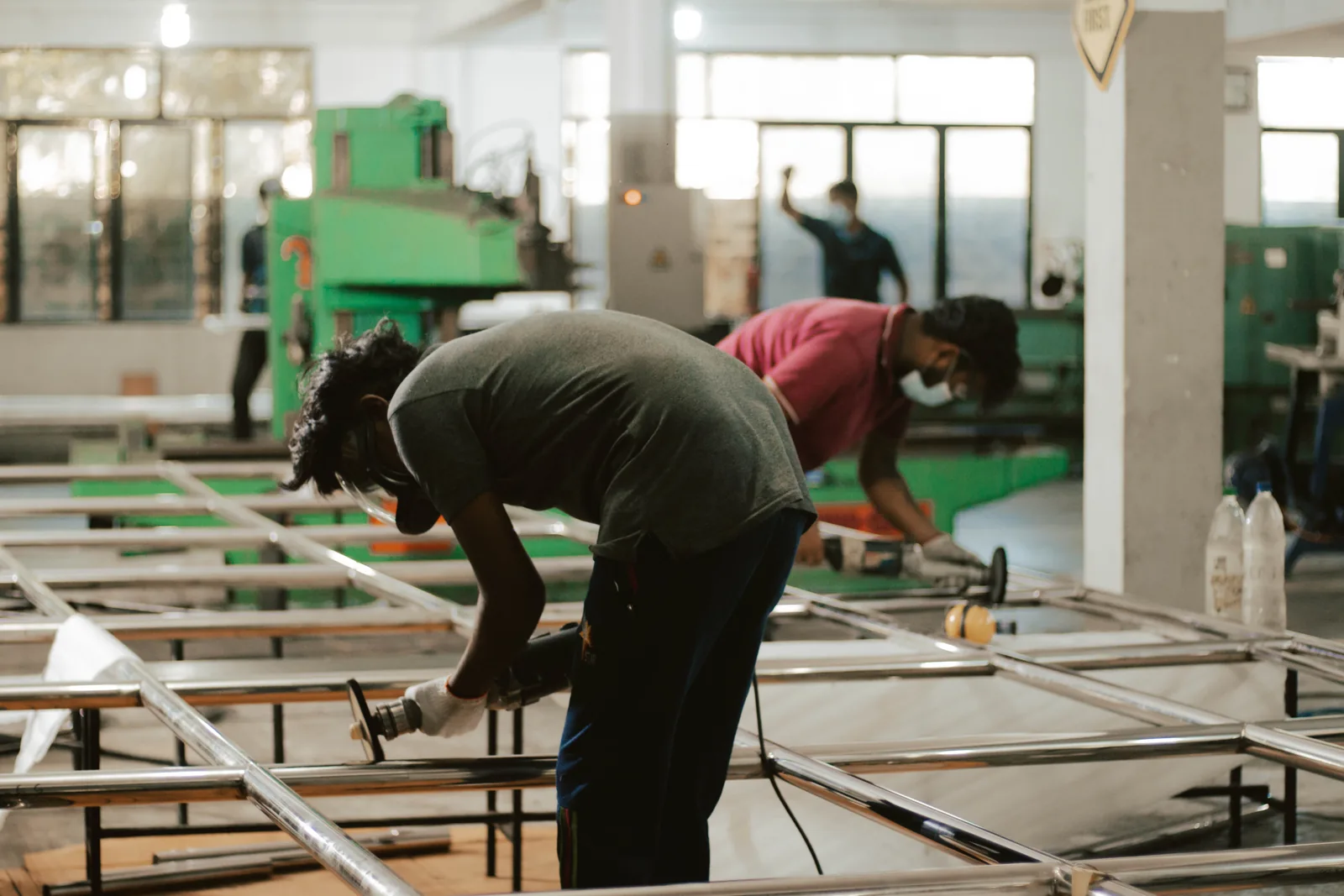
The metal substructure
Everything rides on the frame, so it's built in marine-grade stainless or treated metal, TIG welded and finished for corrosion resistance. Buoyancy modules are integrated into the structure, and the geometry is engineered for stability — a deck that pitches or twists underfoot has failed no matter how good the surface looks.
The water doesn't care how nice it looks. It tests every joint, every day.
The fiberglass surface
Over the frame goes a fiberglass surface — laminated, sealed and finished with a non-slip texture. Composite is the right answer here because it's watertight, doesn't corrode, and can be moulded to drain properly. Crucially, it's bonded to the metalwork with the interface designed in advance, so the two materials move together instead of working against each other.
The fabric layer
Finally, protective fabric covers — marine-grade, UV-stable, built with the drainage and reinforced stress points that coastal textile work demands. They protect the deck and any soft furnishings while shrugging off sun and spray.
Why integration is the whole job
The reason floating decks are a showcase project is that the value isn't in any one layer — it's in how the three are designed to meet. Shared drawings, a planned build sequence and workshop dry-fits mean the frame, the surface and the covers arrive on site as one coordinated system, not three parts hoping to fit.
That's the difference a single multi-discipline workshop makes: the platform you walk out onto is stable, watertight and protected because the people who built each layer were solving the same problem, together.