
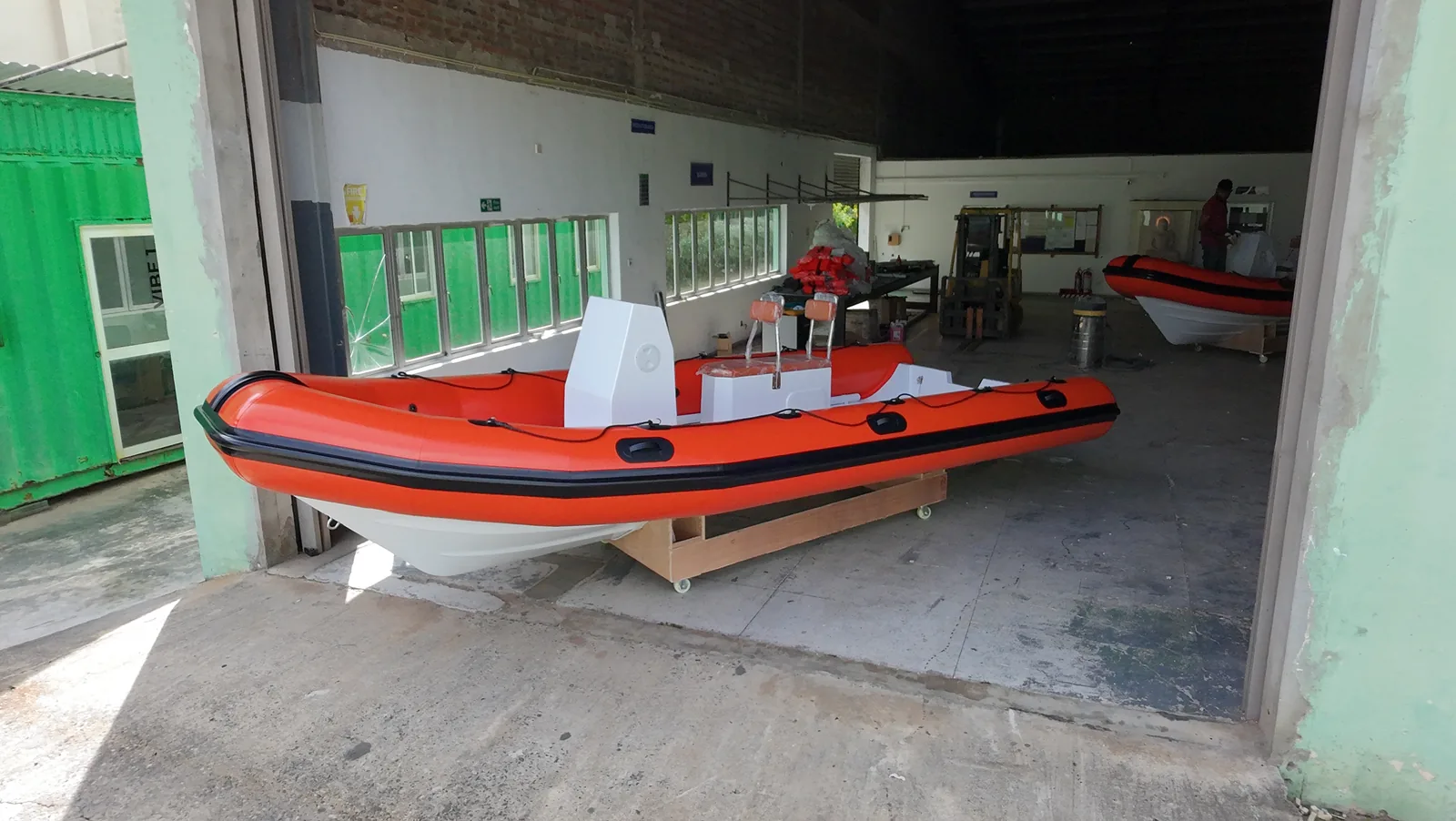
Most fabrication shops do one thing. SEATEK does three — metal, fiberglass and fabric — under one roof, and that's not a coincidence. The hardest marine and hospitality projects are rarely a single material, and having the three teams in the same building changes how the work gets done.
Three disciplines, one floor
Walk through the workshop and you'll pass a TIG welder finishing a stainless rail, a laminator wetting out a mould, and a machinist at a sewing bench binding a cushion edge — often on parts of the same job. Keeping these teams together means a problem in one material gets solved with input from the others, instead of being thrown over a wall to a subcontractor.
Why multi-material projects are hard
When a project combines materials, the difficulty is never in the middle of each part — it's at the interfaces. A metal frame has to accept a fiberglass panel; a fabric cover has to fit hardware that hasn't been made yet; tolerances stack up across three trades. Get the handoffs wrong and the parts don't meet on site.
- Shared drawings: all three teams work to one set of dimensions, so the frame, the panel and the cover are designed to meet.
- Sequenced build: we plan the order — what's fabricated first, what's fitted to what — before anyone cuts material.
- Dry fits: assemblies are trial-fitted in the workshop, not discovered to be wrong at the client's site.
Quality isn't a final inspection. It's a hundred small decisions made before anything is shipped.
Consistency from concept to install
Because the same workshop sees a project from first sketch to final installation, nothing gets lost in translation. The person who welded the frame can be there when it's fitted; the laminator knows exactly how the panel was built if it needs adjusting. That continuity is hard to buy when work is scattered across separate vendors.
People make it work
Tools and materials matter, but the real asset is a team that has worked together long enough to anticipate each other. Skilled craftspeople, shared standards and genuine pride in the finish are what turn three separate trades into one capability — and what lets us take on the multi-material projects that single-discipline shops have to turn down.
That's the workshop behind the website: not a production line, but a group of people solving practical problems in three materials at once.